TECHNICAL INSIGHTS

Mining, Tailings & Industrial Geotechnics

Decision-focused perspectives for owners, contractors and engineering teams.

TOPIC INSIGHTS

Mining, Tailings & Industrial Geotechnics

8 insights

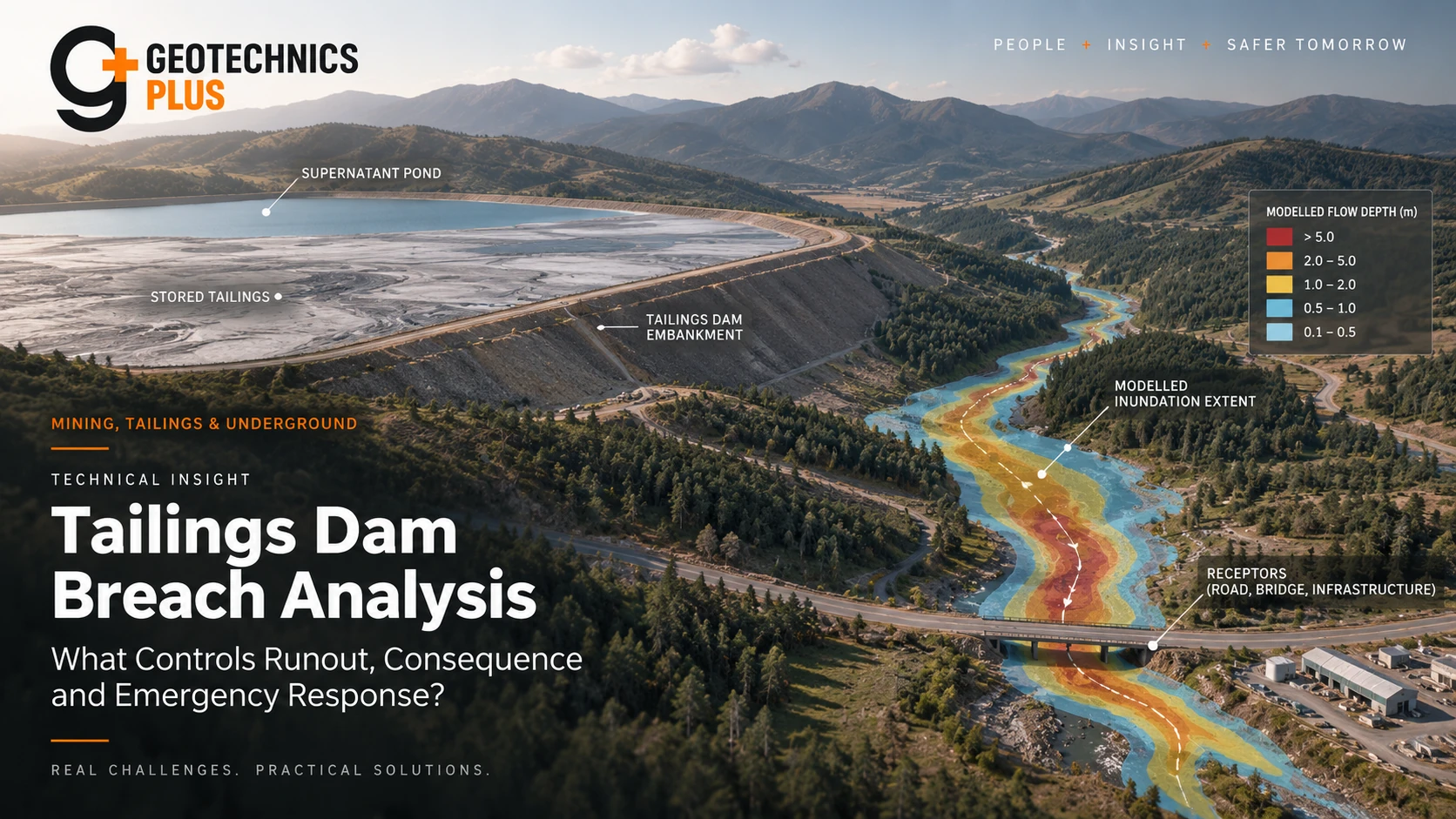
Tailings dam breach analysis showing modelled runout, inundation extent and downstream infrastructure receptors.
Design Review, Risk & Forensics11 min read

Tailings Dam Breach Analysis: What Controls Runout, Consequence and Emergency Response?

Tailings dam breach analysis should not be treated as a water-dam exercise with different material properties. Credible failure modes, stored water, liquefaction potential, tailings rheology, breach development and downstream terrain can all control runout and consequence. This article explains what should be tested, where uncertainty matters, and how breach analysis supports consequence classification and emergency preparedness.

Read insight
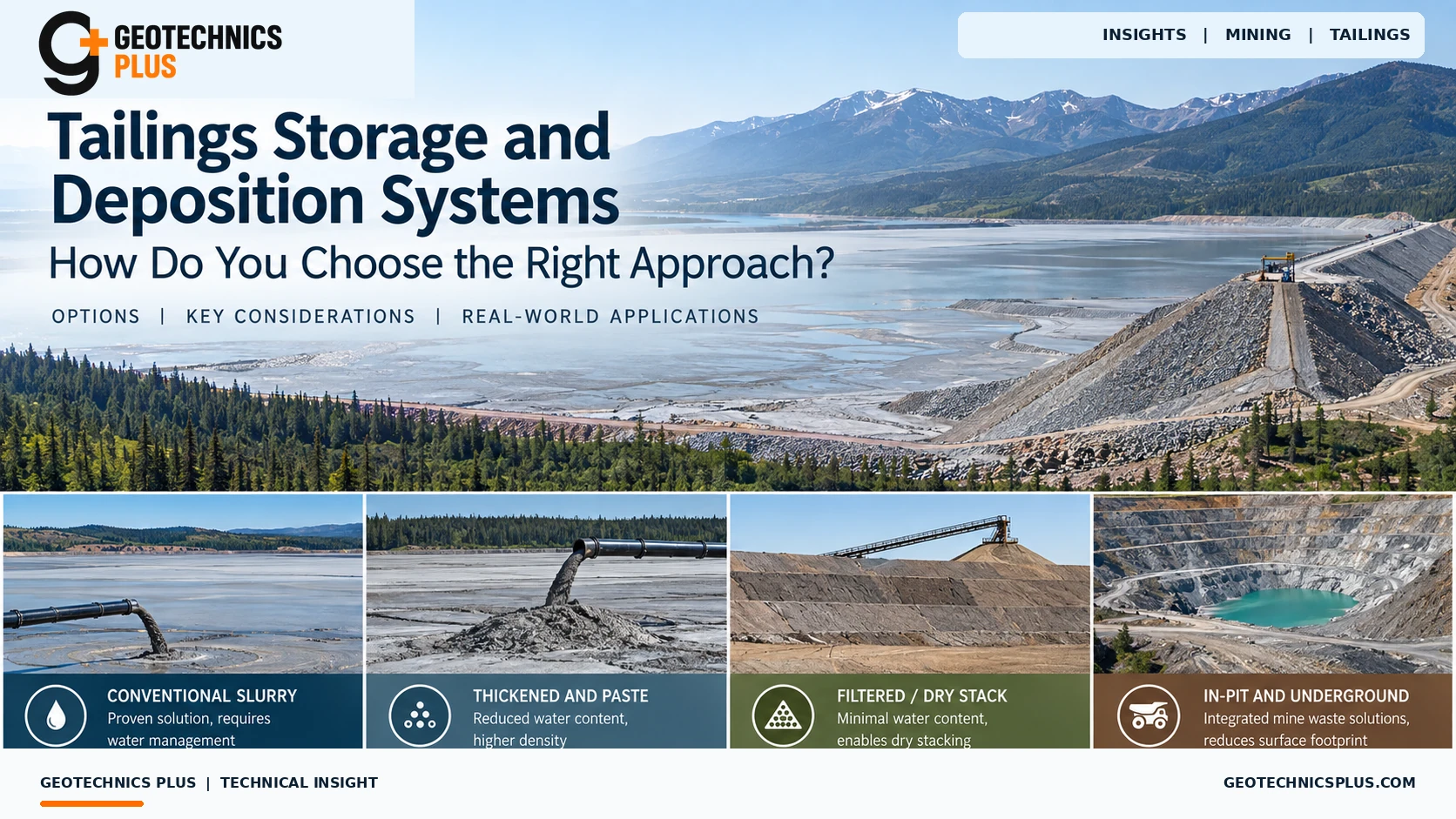
Geotechnics Plus technical insight cover comparing conventional slurry, thickened and paste tailings, filtered dry-stack tailings, and in-pit or integrated tailings storage systems.
Design Review, Risk & Forensics10 min read

Tailings Storage and Deposition Systems: How Do You Choose the Right Approach?

Tailings can be managed as conventional slurry, thickened, paste or filtered material and stored in impoundments, stacks, mined-out pits or integrated mine-waste systems. This practical guide explains the main options, how embankment raise methods differ, and which geotechnical, water, seismic, operational and closure factors should drive selection.

Read insight
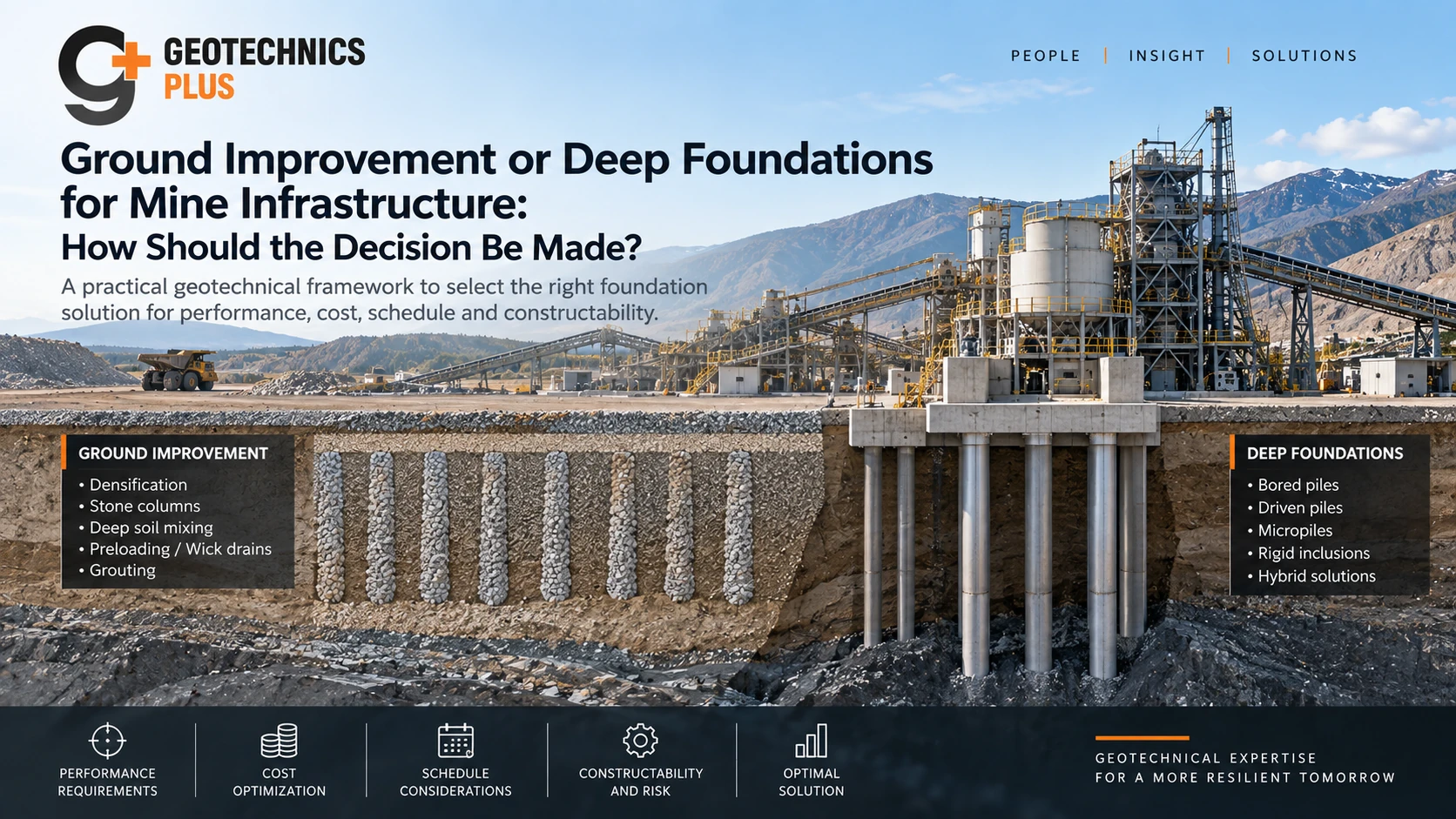
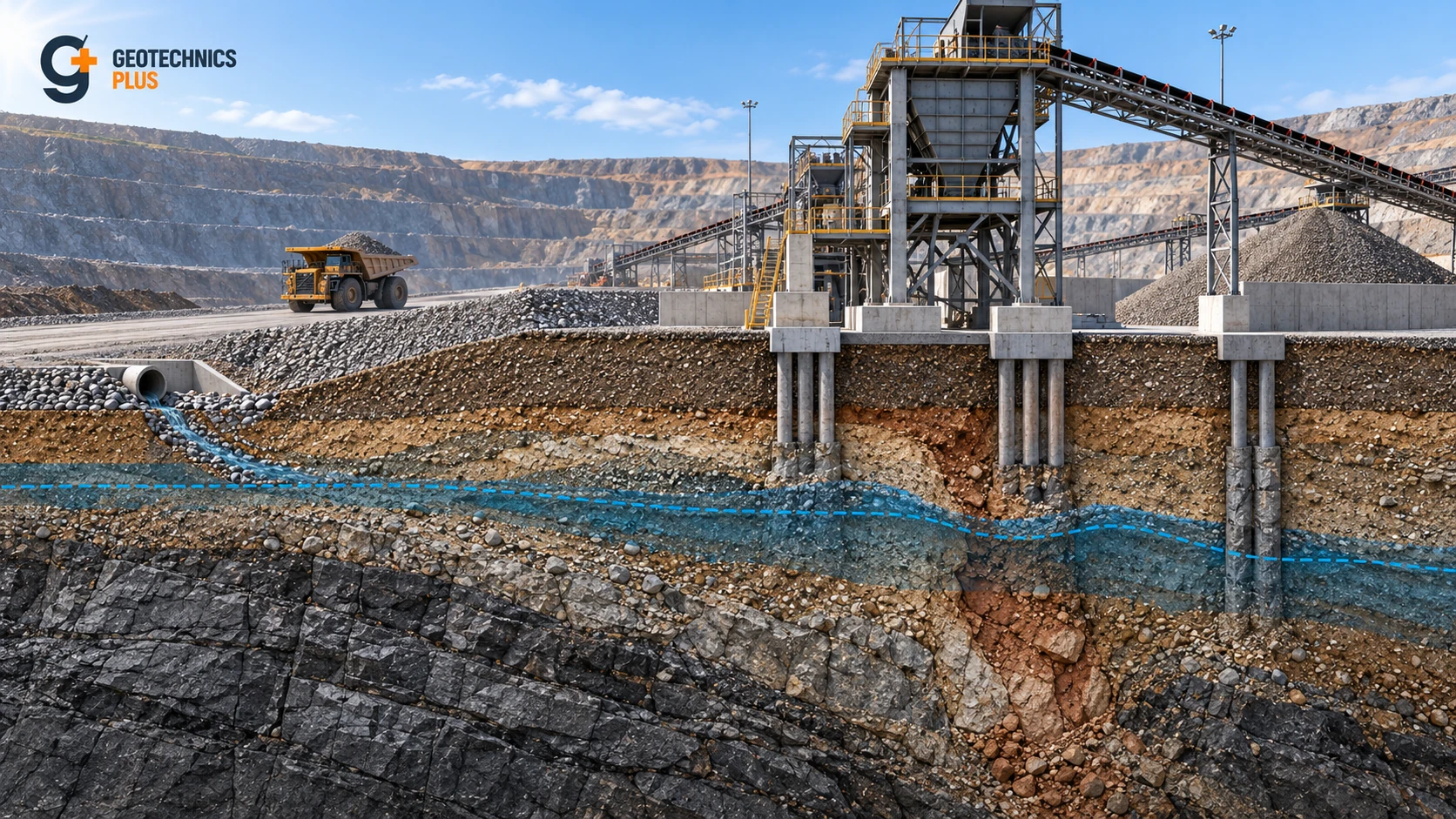
Geotechnics Plus cover illustrating mine infrastructure with ground improvement and deep foundation options in a geotechnical cross-section.
Ground Improvement, Settlement & Soft Ground9 min read

Ground Improvement or Deep Foundations for Mine Infrastructure: How Should the Decision Be Made?

For heavy mine infrastructure, the foundation decision is often not simply shallow versus deep. Ground improvement can sometimes control settlement, reduce variability and support faster construction more efficiently than piling—but only when the ground mechanism, performance criteria and verification strategy are understood. This article presents a practical framework for deciding between ground improvement, deep foundations and hybrid solutions.

Read insight
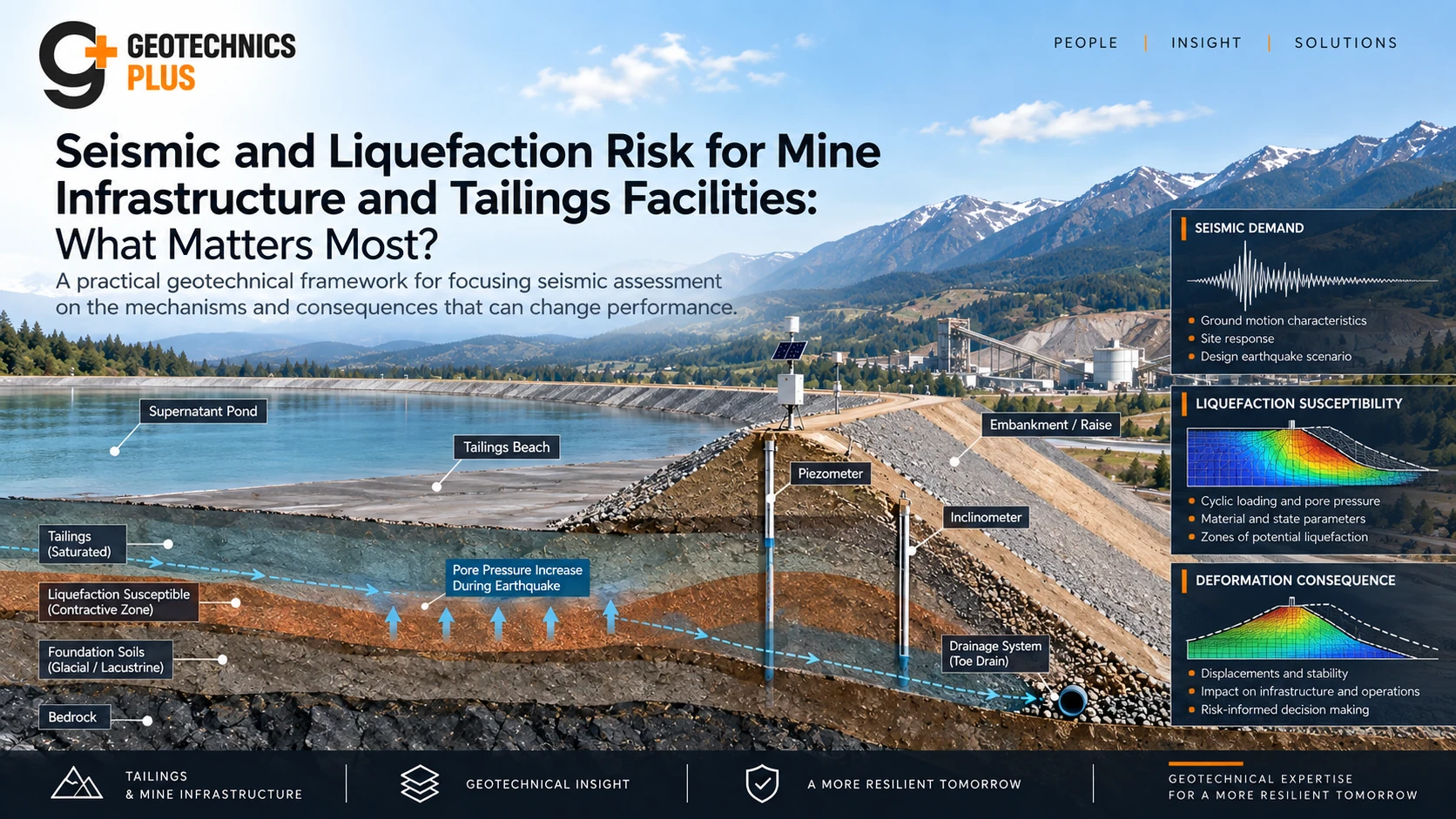
Geotechnics Plus cover illustrating seismic demand, liquefaction susceptibility, pore pressure increase, deformation consequences and monitoring for mine infrastructure and tailings facilities.
Seismic & Dynamic Geotechnics9 min read

Seismic and Liquefaction Risk for Mine Infrastructure and Tailings Facilities: What Matters Most?

Seismic and liquefaction assessments for mine infrastructure and tailings facilities should focus on the mechanisms and consequences that can change performance—not just on a checklist-level hazard statement. This article outlines a practical framework for deciding what matters, when simplified methods are enough, and when deformation-based or advanced analysis is justified.

Read insight